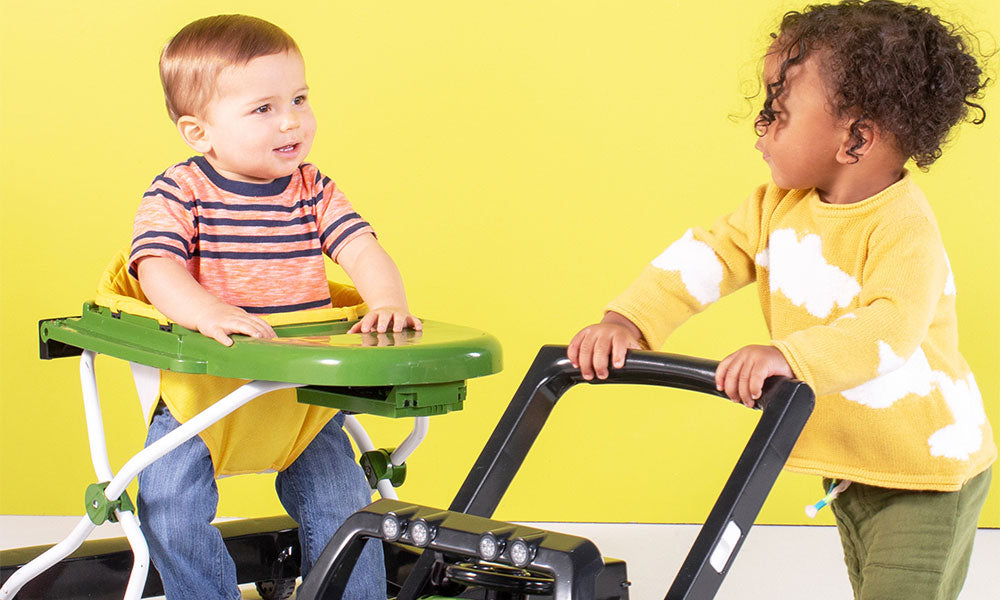
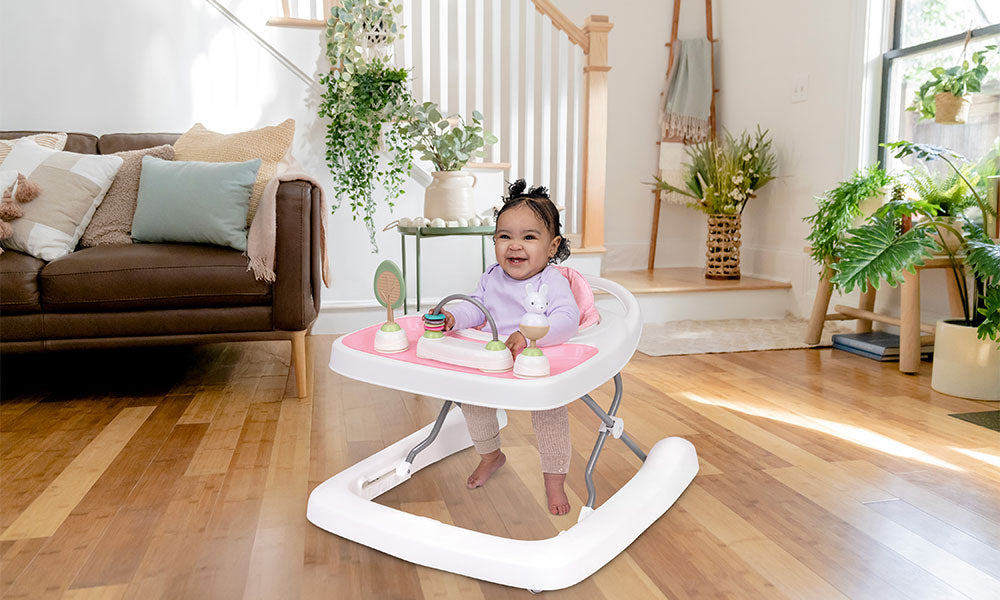
When babies discover movement, life gets…busy.
One day they’re happily parked on a blanket, batting at toys and admiring ceiling fans like tiny philosophers. The next, they’re pulling up on furniture, cruising sideways along the couch, and attempting daring expeditions toward exactly the one thing you hoped they wouldn’t notice.
Mobility is exciting. It’s also one of those parenting seasons that comes with a surprising amount of opinion, especially when baby walkers enter the conversation.
Maybe you grew up hearing walkers were unsafe. Maybe you’ve seen dramatic headlines online. Or maybe you’re simply wondering: Can walkers be used safely today?
The short answer? Yes! When used thoughtfully and correctly, modern walkers can be part of a balanced movement routine. Here’s what parents should know.
First, a Little Walker Myth-Busting
Walkers have carried a complicated reputation for years, much of it rooted in older products and injuries linked to outdated designs. But today’s walkers are not the same category many parents remember from decades ago.
In fact, walker-related injuries have declined dramatically — by roughly 85% since 1990 — thanks largely to updated federal safety standards introduced in 2010. These standards require stair-fall prevention testing, stronger structural integrity, improved stability, and other enhanced safety measures designed specifically to address earlier concerns.
Modern, compliant walkers are built to a much higher standard than earlier generations, with wider bases, stair tip prevention, updated testing requirements, and safety-focused engineering.
That doesn’t mean every walker on the internet is created equal, though.
One important distinction: concerns often arise from unverified third-party marketplace products that fail to meet mandatory standards. Recent recalls have involved unknown sellers with violations including fall hazards and failure to comply with federal requirements.
Translation? Reputable, tested products matter. Choose a brand you trust.
So…How Should You Use a Walker?
Like so many parenting tools, walkers work best when they’re used intentionally, not as an all-day destination.
Here are a few practical guidelines to help babies explore safely and confidently:
1. Think of a Walker as One Tool in the Toolbox
Babies learn through variety. Most experts agree that healthy movement includes tummy time, floor play, crawling, pulling up, cruising, caregiver interaction, and opportunities for supported exploration.
Like many baby products, walkers work best in moderation. Many experts recommend keeping walker sessions to about 20 minutes at a time, using them as one playful part of a balanced movement routine rather than an all-day destination.
Walkers don’t replace those experiences, they complement them. Research around walkers and motor development has produced mixed findings, with many studies showing children continue to develop within normal timelines, particularly when walkers are used in moderation as part of a balanced movement routine.
2. Save Walkers for Supervised Play
This one matters. Walkers should always be used with active adult supervision and on flat, hazard-free surfaces.
That means:
* No stairs or step-downs nearby
* No pools, tubs, or water hazards
* No dangling cords or hot surfaces within reach
* No “I’ll just answer one quick email” moments (we say this lovingly)
A good rule of thumb: if you’d baby-proof the area for crawling, do the same for walker play.
3. Clear the Runway
Babies in walkers can become surprisingly efficient little commuters.
Before playtime:
* Remove small objects
* Secure rugs or tripping hazards
* Give baby room to move freely
* Create a calm, open environment for exploration
Think less obstacle course, more tiny indoor promenade.
4. Watch for Readiness Signs
Not every baby is ready at the same time, and that’s perfectly okay.
Many babies begin showing interest in supported mobility around the same season they’re pulling up, bearing weight on their legs, or becoming eager to explore their surroundings. According to developmental experts, independent walking typically begins somewhere between 9 and 15 months, with a wide range of normal in between.
As always, follow your pediatrician’s guidance and your baby’s developmental cues.
5. Remember That Movement Is Emotional, Too
Here’s the part we don’t talk about enough: learning to move is about more than muscles.
It’s confidence, curiosity, and agency. The utter delight of discovering I can go there myself.
Used thoughtfully and in moderation, walkers can support gross motor engagement, independent exploration, interactive play, and even cause-and-effect learning through music, buttons, and sensory play.
There’s something pretty magical about watching a baby realize they can participate more actively in the world around them.
A Few Walkers We Love
Baby Einstein Ocean Explorers 3 in 1 Walker
With 3 height positions and 3 ways for baby to play and learn, little ones will love to explore the sights and sounds of the sea in this submarine-themed walker.
Bright Stars Wanderlights 2 in 1 Walker
Help baby build early exploration and independence while they play. Rewarding them with lights and sounds as they work towards their first steps, this developmental walker includes a removable light-up spinner toy and 2 modes: walker mode and floor play mode.
Ingenuity Smooth Strides Walker
Give baby options for independent play with the included removable bead chaser toy that attaches to the tray for entertainment. Or attach baby's other favorite toys. A three-position adjustable height bar means this walker can remain in use even through a few growth spurts.
Parenting today comes with no shortage of noise, opinions, and scary headlines. But when it comes to walkers, nuance matters.
Modern walkers have evolved significantly, and reputable brands invest heavily in testing and compliance.
No product replaces supervision or good judgment. But used appropriately, a walker can be one joyful, confidence-building part of a baby’s movement journey, perhaps with a few triumphant laps around your kitchen island.